Friday, November 16, 2007

The Job Interview

INT: HAL CARDMAN sits at the desk in his office. His intercom buzzes. The Americards, Inc. office is sparsely decorated. On the wall behind his desk is a poster with the Americards Logo -- a fist clutching a Christmas Bulb. The text below this image reads: “Americards: We Make the Holidays.” His intercom buzzes again. CARDMAN presses the buzzer.


SECRETARY
Your interview for 8 o’clock is here.

CARDMAN
But it’s 1:30.

SECRETARY
Yes, I know. He said it couldn’t be helped. Here he comes.

CARDMAN
I’m not even ready for him.

The door busts open and REEVES steps in. His gait is lackadaisical, his appearance unkempt -- grisly facial hair, a half-untucked dress shirt with coffee stains, crooked sock tie, dilapidated denim jacket with one Deerhunter patch on the shoulder. He is eating a chili-cheese dog.

CARDMAN
Uh, please (shuffles through some papers on his desk), uh, Mr., have a seat.

REEVES
Reeves.

CARDMAN
Pardon?

REEVES
Reeves. My name is Reeves.

CARDMAN
Oh. Have a seat Mr. Reeves.

REEVES sits in a chair in front of CARDMAN's desk. He places his half-eaten chili cheese dog on a file cabinet to his left.

REEVES
Just call me Reeves.

CARDMAN
This interview was scheduled for 8, originally. Did you get caught in traffic? (REEVES shrugs) Okay. Well, I guess we can get started. So what brings you to Americards?

REEVES
Nothing.

CARDMAN
Oh, I see that you were referred by an agency.

REEVES
Whatever.

CARDMAN
You didn’t submit a resume. What qualifications do you have for this position?

REEVES
Nothing.

CARDMAN
How many positive references can you provide?

REEVES
None.

CARDMAN
When would you be willing to work?

REEVES
Never.

CARDMAN
Do you have any outstanding offers elsewhere?

REEVES
Nope.

CARDMAN
So this would be your first choice?

REEVES
Uh-uh.

CARDMAN
Where do you see yourself in five years?

REEVES
Nowhere.

CARDMAN
Why do you even want this job?

REEVES
I don’t.

CARDMAN
Fuck you. You got it!

The two stand up and shake hands. End scene.

Thursday, November 15, 2007

The Jacket of Leaves

Still hanging in my closet,
between a tropical shirt and snow pants
is the jacket of leaves.
Its colors have faded,
only the thread and stems remain,
remnants of a grand idea
to wrap ourselves in decay
from September until December.

You call me one morning,
awake me from a dead sleep to say,
that the leaves are changing again.
That you would buy the spool
if I would pick the fabric.

The memory swallows me,
of last year’s exchanges
outside the English building.
Brisk mornings surround us,
pulling on our cigarettes,
looking into the trees, wondering.

I laugh, the red ones are best,
though yellow works too.
We envision the jacket
as a sunset in motion,
a streaking flare through fall.
Passersby will brim with envy.
They are green. We are red.

This is October; umbrage hangs heavy.
The air nibbles at dusk and bites at
leaves and night falling.
Trees expend the equinox
smoldering in fire pits.

You wear Autumn over your shoulders,
your leaf jacket glows like hot coals
until the falling foliage becomes falling snow.
The setting sun fades to brown,
disintegrates in the wind,
leaving only stems and thread.

Wednesday, November 14, 2007

Maus Haus

Five years and two lifetimes ago, I was an architecture major. Most of my time was spent in a sleep-deprived fog of frustration and passive aggressive turmoil. From the get-go, from the very start, it did not fit with me. I knew this very early on, for within the first two weeks of entering the program, I had pulled an all-nighter. It snuck up on me, the first night of my life when I did not get any rest. Around 3 a.m., things stopped making sense. I brewed a whole pot of coffee and drank none of it. I broke back into the studio after hours to find the place deserted. No one stayed up late at the beginning of the semester. There was no reason to. One would think I’d have come to terms with my short comings and just moved on. But I lived the next two years in denial.

It wasn’t an entirely uphill climb those two years. Some days and weeks were easier than others, but in the grand scheme of things it was never meant to be, nor was there anything I could have done to make it work.

Five years and two lifetimes ago, I began a failed endeavor, but kept on with it for fear of embarrassment or the great what if?!

Four years and two lifetimes ago, I realized it was not going to work, no matter how hard I tried, but I kept on anyway, for the same reasons listed above.

By the end of my third semester as an architecture student, the assignment that defeated me wholly, that completely crushed my spirit as an artist and creator, was not in and of itself very complicated. We had to design a pretty or hip house in a city then multiply that house by four, each residence butted up against one another in a line. It was a rowhouse. You’ve seen them; they’re everywhere. I can practically look out my window onto Cedar and see a whole mess of them. I could have copied one of those designs and probably received a B-/C+ on the project. But I tried (oh, how I tried) to do something a little different.


My rowhouse, much like my life at the time, was misguided; misaligned. The walls were positioned at odd, obtuse angles. A few rooms were shaped like triangles. The floor plan revealed a kitchen with no outside view. Professor Davies, in her infinite spatial wisdom, drew this to my attention on the final ink drawings: a misshapen red oval scrawled around the thick black line that signified kitchen wall. Part of it encircled the sink and refrigerator. Next to the circle, an arrow and text: ‘NO VIEW!’

At the time, I was in a relationship. Or at least I kept telling myself I was. This endeavor also proved itself misguided and misaligned. My life became increasingly tensile, as the two factors seemed to place more stress upon the span than it could withstand.

In the end, everything collapsed. My rowhouse puttered to the finish line with a few botched section drawings leading the stampede of things I never got done. The final project, among a host of other things, called for drawings of aspects of our project we found ‘interesting.’ I sat and I sat and stared and stared and could find nothing remotely interesting about my monstrosity of a design. My residence was grotesque, unlivable, as far from aesthetically pleasing as one could meander.

My rowhouse was a solid D project. At the time, before we received our grades, during long nights that eventually bled into long days that eventually bled into more long nights that eventually hemorrhaged whole weeks, I was of the belief that merely finishing this marathon warranted at least a B. I had been mistaken, I thought, after slitting the piece of drafting tape and opening the grade sheet left on my studio desk. I looked at that D and thought that I had been taken advantage of, that the profession of architecture had victimized me. I had given so much time and effort and had nothing to show for it.

Years later I realized that my professors had been right all along, for I never finished that project and thus never deserved a decent grade. My lady interest left me for greener pastures and that had made me sad. In retrospect, I drove her away because, much like my stint with architecture, I had no idea what I was doing.

I entered a renaissance period shortly thereafter and renewed my passion to produce great things in architectural design. I took the cumbersome rowhouse model back to my dad’s house and locked it away in the shed. It would not see the light of day for four years. I attempted to do well at my design work and improved markedly but fell behind in my other coursework. More conflicting downward forces were affected upon the span.

Three-and-a-half years and one life ago, I was kicked out of the architecture program. I received the rejection in the form of an email from the dean himself. The subject line read: ‘Not accepted into 3rd year.’ I didn’t need to read on, but I did. The explanation was as follows: ‘GPA was a problem, etc. Sincerely, C McW.’ The end. With very little consideration, I scrapped my architecture career and fell back into writing where I belonged. There were some growing pains but I felt fine about the shift much sooner than I thought I would. There were no hard feelings in the end.

One month and no lives ago, my special lady friend and I went home to visit my dad. Towards the end of our stay, I stepped off the back deck and saw that the old man had started a burn pile in the fire pit behind the shed.

‘You wanna burn that rowhouse now?’ he asked as I approached.

Burning the rowhouse had been one of my intentions since leaving the program. My dad and I talked about doing it every time I came back to visit. I had romanticized the act over the years, as the rowhouse not only signaled the end of era for me but also (distantly) a lost love.

‘Okay,’ I said.

I opened the doors to the shed and was immediately overtaken by the odor of stale piss.

‘Had a mouse problem in here for quite a while,’ Dad said. ‘Can’t find where they’re living.’

Our shoes crunched against droppings on the plywood floor as we searched the upper shelves for my model. The shed itself was small and my rowhouse was rather large for a model, so we quickly became confused as to where it had gone.

‘I didn’t burn it,’ Dad said. ‘Must’ve just moved it somewhere.’

‘What’s in here?’ I asked, pointing at a green plastic storage container on the floor.

‘Don’t know. Let’s take a look.’

My old man pried off the lid and roughly a dozen baby mice leapt out in all directions. They scampered along the wall and found the safety of dark corners. A few made a break for the door. My rowhouse sat inside the tub and we pulled it out for inspection.

The family of mice had snuck in through the rear window, which had been widened to accommodate the hustle and bustle of a large family. The kitchen was full of seeds and other munchies. The living room was furnished with fluff and lint and such. It looked like they had spread out into a few of the units. The place had really become a multi-family residence. Most of the family had escaped when Dad pulled it out of the container, but a few kids were left behind in the confusion. They hid in the dark corners of the triangular shaped rooms, safe from our stares and the stick poking of my meddlesome little brother.

‘You still wanna burn it?’ Dad asked.

I thought about that for a while, pacing around the yard, checking back occasionally to see if the mice were still hanging around inside. They were.

Eventually, I said, ‘Nah,’ and we attempted to shoo the remainder of the squatters toward the woods. They would have none of it -- too frightened by my bro’s frenzied poking to venture into the real world.

It was time to go, said my special lady friend in not so many words. She grabbed the palm of my hand and tapped it three times with her finger: our signal for ‘Time To Go.’

I thanked my old man for the effort and for saving my rowhouse for all those years. He said that it wasn’t a problem but asked if I wouldn’t mind if he went ahead and burned it. I said I didn’t mind at all. My special lady friend and I left.

In the end, the rowhouse was livable. It housed a great many tenants. Said tenants affected much change on the structure; put a lot of tension on the spans, so to speak. It was no longer suited for its intended purpose and had to be condemned. The situation reflected that of a great many other buildings: despite one’s better judgment, a project is undertaken and the design is misguided and misunderstood by all parties involved and there is a lot of confusion and too many factors acting against one another and not enough cohesion and you go ahead and build the thing anyway and that’s a whole other headache and then that part’s done and it isn’t received well at all and you wonder if the whole thing was even worth it and people live and work in it anyway and everyday the place is used and inhabited and inexplicably changes people’s lives and then inexplicably it doesn’t anymore and it is empty for a long time and eventually it is condemned and set on fire and extinguished and torn down.

I talked to my dad a few days later and he said the thing went up in flames with little fanfare. I hadn’t missed much. All the better, for I had seen it before and see it everyday -- structures that change lives everyday and then don’t somehow anymore. Dozens of little mouse babies living in buildings completely oblivious to where they’re going or where they’ve been.

Tuesday, November 13, 2007

excerpt from my memoirs, Bocced Up: My Life Interpreted Through the Great Sport of Bocce Ball

First Practice

One night in early May, Jdubbs stormed through the front door, right arm laden with a heavy leather sack. He had just returned from his parents' house in Erie and looked like he had ran the whole way back. Mopping the sweat from his brow with his left hand, he released the bag from his right. It clamored to the hardwood floor with a thunderous commotion.

Thed yelled from down the hall. “What the fuck was that?”

I looked up from the Chabon book I was reading. “What’s in the bag?”

“Get up,” dubbs said, “it’s time for practice.”

He grabbed Yiddish Policeman’s Union from my grasp and tossed it into the decorative fireplace. Candles went flying.

“Practice?”

“What the fuck are you guys doing?” Thed echoed down the hall.

“Bocce,” dubbs said. “Let’s go.”

“Where are we going to practice?”

“I figure we’ll go someplace close.”

“I’m in,” I said, scooping up my shoes. Chabon could wait. Bocce was now.

Thed came stomping from his room. “Jesus guys, why don’t you make a little more fucking noise?”

“Get your shoes on,” dubbs said. “We’re having practice.”

“Ah dude, I can’t. Working on my blog now.”

Jdubbs and I cast sideways glances at one another. We chuckled.

“Fucking loser,” dubbs said.

“You’re off the team!” I yelled. “Mandatory practice.”

“It’s about to rain,” was Thed’s argument. And then: “I’m tired.”

We refused to hear anymore. Jdubbs hoisted the balls off the floor. We blew through the doorway. The bocce bag collided loudly with the walls of the stairwell as we made our way down. It left divots in its wake.

As we stepped onto the sidewalk, heavy wind and a rumble from far away made us wonder how much practice we’d actually get.

“We still got time,” dubbs said.

“Those clouds are gonna blow over,” I said.

When we reached the end of the street, dubbs said his arm was about to fall off. The wind picked up. We needed to find a place to play. A quick flash of lightning illuminated the swatch of grass dividing the four lanes of Euclid Heights Boulevard.

As fast as we could, we darted halfway across the street and set up a game on the median of the boulevard. The course was rutty and a few times our bocces came close to rolling into traffic, but Jdubbs and I managed to get a game in. Sometimes cars would slow down to watch. One time a guy stopped, smiled, and said, “Bocce.”

Dubbs won of course, for his bocce ability reigns supreme. Right about when he administered the deathblow, it began to drizzle. Thunder beckoned louder. It was time to go. I lugged the sack home. We stepped inside the entryway of our building just before the sky opened up and the rain came. We congratulated each other on a game well played. On the way up the stairs (bag thudding off the wall), we had our first meeting as Don (dubbs) and consigliere (myself). Upon reaching the apartment door, we were still undecided as to whether or not we should let Thed back on the team.

Archive I
Archive 2

Monday, November 12, 2007

Chicago Bar Story*

I like you.
You got intensity my friend.
This guy I don’t know so much about.
He wears a ball shirt.
Don’t wear no fuckin’ ball shirt.
What’s your shirt say, what is that?
Baltimore Orioles?
Don’t wear no Baltimore shirt.
Wear a Cubs shirt.
You look like you’re fucking twelve years old.
I like your shirt.
The Who, who the fuck are you, right?
You got nice teeth.
He’s a got nice smile, don’t he?
Get a beer, a light beer.
Did I stutter, did I fuckin’ stutter?
Get a fuckin’ light beer.
Guinness, huh?
I like your class.
I like you.
I don’t know so much about this guy.
He smiles too much.
I just wanna let you know, when shit goes down, the Quinnster’s gotcha back.
You wanna make $500?
I was a ringer.
Do you know what the fuck that is?
A fuckin’ ringer?
I like you.
You square go?
I’ll take anyone in this bar.
See that guy?
I’m gonna cut that guy with a fuckin’ switchblade.
You Ohio boys, you smoke pot?
Fuckin’ roll me one then.
Yeah that’s right, roll me a pinner.
I like you.
You got intensity, my friend.
Remember, when shit goes down, Quinnster’s gotcha back.
I’m a mover
I’m in the Union
I make $35 an hour
Hard work in this town
I was Golden Gloves
See that, rock hard
I’m gonna cut you with a switchblade
You got intensity
You gonna get the pussy with that
I like you.

*This poem was an assignment from a Poetry class I took in college: write in the voice of another. It is about a man I met in a Chicago dive about a year ago. Many stories linger about this conversation with Rich Quinn, or the Quinnster, as he became known. At some point later this month, I'll try to put together a thorough retelling of that tale. Stay tuned!

NaBeGroMo Update


STATUS: Itchy

Sunday, November 11, 2007

Darts


The dart arced through the smoky air of the billiard hall. I was one 16 away from taking the darts series from Mike Sokol. One chalky circle from winning the cricket game. Then Mike would owe me a beer. The dart’s trajectory angled high, then quickly dropped off, like a knuckle ball. A tensile thwack signaled that it had collided with one of the metal dividers between the point wedges on the board. Although neither of us could tell where the dart had specifically landed (16 or 7?), it was definitely close.


Mike and I had been trading off wins in our five-game cricket series. It seemed as though I could gain a healthy lead, but Mike would surge back with several triples in a row. He was the epitome of luck when it came to that. I would keep plugging away, playing defensively, picking up my 20s, 19s, 18s, 17s, 16s, 15s and bullseyes in sequential order. I was rather obsessive-compulsive about that sort of thing. Mike refused to go away and by the fifth game, I had to alter my strategy and take my numbers out of order, instead riding the hot hand, as it were. It came down to a Game 5 clincher. One more 16. Loser buys beer. High Life, no less.


Now, Mike and I had drained about a dozen brewskies by this point in the night -- beer and darts, as I like to say, they go together -- and my vision was as crooked as the last knuckle-dart I had fired.

My dart, as it appeared to me, had landed inside the swatch of off-white that I had intended it to. I grabbed a piece of chalk and circled the 16 on the scoreboard and drew a smiley face near the margin. I had won. Under any normal circumstance, I would have removed the darts and my opponent would buy another round and we would play another game. But because this was the end of a rather grueling five-game series, I let sleeping darts lie, and turned to let Mike bask in my glory.


At about that moment, events began to blur. In meeting eyes with Mike Sokol, I became so stricken by his rage as to begin seeing white spots flash before my eyes. It was as if his eyes were about to send lazers across the room and burn me alive right there in the pool hall. He did not speak. He did not yell. He only moved deliberately toward the board. It was as if Mike’s intense gaze drained me of any rational thought. I began to move toward the door. When Mike gets that look in his eyes, it’s best to find an exit.


I recall mumbling something about having to use the bathroom. Still no words from Mike. I approached the corridor leading to the bathrooms. While passing Mike, I noticed a curious bulge at the small of his back; a malignant, angled protrusion that I immediately realized was his Glock. He talked a lot about his Glock. I just never assumed he actually had one. Turns out he did.

As I stepped below the neon EXIT sign that designated the bathroom hallway as a safe way out, I heard Mike yell something about my final dart actually being lodged on the 7 side of the board. He emitted a bestial scream and tore the dartboard from the wall. I did not turn around to see him pull the pistol from his waistband. Instead I bolted for the door, hoping my cyclists’ legs could power me without the locomotion of crankshaft and chain. Some women leaving the ladies room entered my path. I threw them to the ground and kept on like hell. At about 30 paces into the parking lot, the door blew off its hinges and Mike Sokol came barreling after me like an ornery bull with a bazooka. Several reports came from the pistol, thwacking into the building directly in front of me. I dove behind a dumpster. The bum that was living inside stuck his head out to see what the commotion was. He was promptly greeted with the full brunt of Mike Sokol rage. This came in the form of 4 slugs to the chest. Back down he went.

While crouched between the dumpster and a wooden fence, I began to wish that I possessed the skills of diplomacy or a hand grenade. But all I had were my wits and a fence to jump. With calf and shoulder muscles burning, I vaulted over the wooden fence in front of me, bullets sending splinters like confetti through the air as I slid over the top.

I heard more of Mike’s frustration: ‘FUCK, dB! I love you man!’ and the jingle of car keys. Then came the familiar rumble of his truck firing up and then an engine roar and tire squeal and then horns and more yelling that slowly faded into the distance. I stood up and dusted myself off, smiling at yet another victory over my best friend, Mike Sokol. Sirens approached from the distance as I walked the half block home.

Saturday, November 10, 2007

Free Ride

There’s always an allure with free stuff. You’re more inclined to take something given to you than spend money on it. This is especially the case with stuff you don’t really need. I’m of the belief that once your basic needs are met, like food and shelter, you can branch out a bit, and don’t necessarily have to invest every nickel and dime into new stuff. You spend your time on shared experience, as opposed to just spending your money on random crap. I’ve come to rely upon benevolence as a means to keep me alive. Likewise, I am rather liberal with my stuff and try to give as much as I get.

And I know a lot people say that nothing comes for free. That there are always costs, and, most of the time, they outweigh the returns. These people are probably right, but I think it’s all a matter of perspective. A little optimism goes a long way.

This is a little story about me trying my damnest to keep the costs of a free car on par with the returns.

A little over a year ago, my grandparents asked if I would like to have their 1987 Chevrolet Celebrity. I had, during my college career, grown accustomed to a carless (read: careless) lifestyle, relying on bicycle, legs, and friends to help me reach Point B. I had even become idealistic over that span, and would frequently decry -- from the backseat -- the use of vehicular travel. However, when presented with a free car, I tossed all that idealism out the window. I’m assuming it landed at the feet of a Native American, who shed a stoic tear. But, then again, that’s an assumption, as I was moving at 70 mph at the time. I tend to only look back at pedestrians after having soaked them with puddle water.

During winter break of my senior year of college, I made the trip to my grandparents’ house in Pittsburgh to claim this free ride. It wasn’t the prettiest site—the rust infection was in its infancy, but still rather apparent; two horizontal gashes ran along both sides of the car, as if the previous owner had wedged it between two concrete pylons or, more realistically, two Hummers in the mall parking lot; and the bumpers sat rather askew, probably as a result of another unfortunate run-in with a pilaster or an H2. But still, it was a car. It was free. And, according to the vanity plate, it was a lady -- the Shelia-5. I couldn’t help but wonder at the whereabouts of Shelias 1 through 4.

My Pap expressed a heaping amount of sadness at having to part with his gem. He had bought it used for a song in the early ‘90s, and had kept up on it religiously. He apparently loved the thing, and, as we made our way to the title bureau, tried his best to guilt trip me into reconsidering. I almost did, save for the fact that I needed a ride back to Ohio, and taking this car was my only option.

At the title bureau, Pap asked me if I had the money to afford the insurance, as I sure as hell didn’t have the money to buy a car of my own. The title clerk looked up curiously, judging from my unkempt college appearance that I was destined for a life of poverty. I told them not to worry -- I would use student loans. The clerk looked at me sympathetically.

“I live off of the benevolence of others,” I said.

“Oh, honey, that’s wonderful.”

It was wonderful. I had fallen back into driving, though it took some time to grow accustomed to the mechanic issues. Take, for instance, the BATTERY light that flashed periodically when I applied the brakes. This began to surface about 6 weeks into my car ownership, and I -- quite mistakenly -- assumed that it was far too early for a problem. One night while taking me to the Circle K for scratch-off lottery tickets, Shelia became gripped by a violent seizure and died across three lanes of traffic. I panicked as a series of headlights bore down at me. I got out and pushed her back into the lot, corralling her into a parking spot. She would nest there for another week or so. Staying parked for extended periods of time became her favorite hobby from that point forward.

As opposed to dealing with the problem then and there, such as having it towed to a garage, I opted to have Shelia displaced to the carport of my apartment. Warm weather had moved into town, and I began walking places again. Plus, I didn’t like the idea of my car telling me what to do.

“If you want to play hard to get,” I said to her, “you can just stay there all summer.”

And she did, accruing an attractive layer dust to compliment the rust. Shelia’s ailment was rather tricky to diagnose. Originally, we thought she only needed a new alternator and a new battery. Simple, right? Wrong. At one point, I watched as the positive battery terminal glowed like a hot coal as a friend and I attempted to jump her back to life. Have it your way Shelia.

I left well enough alone.

But eventually, the lease on our apartment expired, and with it went my car’s free reign over the carport. I moved to Cleveland and left Shelia behind. I did not take action until my former landlord, Rillis Moneypenny, called to complain about the squatter taking up residence in the new tenant’s parking spot.

“Ryan, Rillis Moneypenny, I drove past the old apartment today. I see your car is still there. Looks like it hasn’t moved in some time. What’s it doing? If it’s not out of there by the end of the week, I’m going to have it removed.”

Moneypenny’s threat could have been a means to get rid of my car for good -- but I hesitated. For some reason, I was enamored with the idea of car ownership. Shelia had not moved for five months, and had regressed into a rusted-out jitney. But she had rusted out a special place in my heart. I had her towed to a Kent-based mechanic.

Even the repair process became a debacle, and Shelia sat in the garage for weeks. She was acting rather coy, and would not divulge her various ailments. Following several radically invasive surgeries, she was released and greeted me, upon her return, with an abrasively loud engine rumble. Apparently, her period of stasis had withered away the muffler and exhaust pipes and caused Shelia to sound, upon acceleration, like The Incredible Hulk.

As the mechanic backed her out of the garage, I had to comment, “Geez, I don’t remember her sounding this loud.”

The mechanic wiped his neck with an oily rag. “Yeah, there’s a lot of stuff wrong with this car. But let’s take it one step at a time. That’ll be 500 dollars.”

The free gift was becoming less and less economical. But, as I had just graduated from college, I assumed that I needed a car to get from interview to interview. Realistically, to be an adult, I needed a job. To find a job, I needed a car, right? Wrong. I needed a marketable major to find a job. As the only career opportunity that presented itself was a serving job around the corner from my new apartment, I left Shelia to once again relax curbside.

I felt a little guilty, passing her on the sidewalk each day on my way to work.

“I’m sorry, Shelia, I never meant for it to work out this way.”

Then, one day, she was gone.

There were no shards of glass littering the curb around her former home, no crowbar left in haste by the frantic thieves. Police Officer Shwartz of the CHPD arrived on the scene. She told me that the car had not been towed the night before. This left only one other option -- theft.

I was saddened at the loss, but my time with Shelia had been one of abuse and neglect. I couldn’t help but think that her new owners were appreciating her more than I had. I envisioned a utopian world, in which a homeless person had stolen my car, not only as a means to make it to job interviews on time (provided the car didn’t break down, which it had a habit of doing), but also to keep a roof over his or her head. The front bench seat was quite comfortable to sprawl out on. He or she could become more cultured and articulate by listening to my NPR presets on the stereo and slowly reenter society.

P.O. Shwartz said that stolen cars are usually taken on joy rides and turn up abandoned once they run out of gas.

I said that Shelia didn’t have much gas in her, but was confident the new owners would stop to fill her up on the way to getting the oil changed and wheels aligned.

Schwartz asked if there were any distinguishing marks on my car or something that would set it apart from other cars on the road.

“Um, it needs a new muffler, so it’s pretty loud. Like abrasively loud. If you just want to tell your peeps to keep an ear out for it, that’d be great too.”

“I’ll put that in the report, Mr. DiBiase.”

“Thanks.”

“Oh, you might want to call your insurance company, too. Let them know about this theft.”

“Insurance, riiiiiiiiight. . .”

At three in the morning a few days later, I received a call from P.O. Shwartz. She informed me that they had found my car at a place called the Boneyard in Mayfield Heights. Assuming she meant the car had been found in an actual boneyard, I breathed a sigh of relief: Shelia really did take care of herself. Then came the realization that The Boneyard is actually an entertainment venue, much in the same vein as Dave & Busters. These guys really were on a joy ride. Huh.

Shwartz recited a laundry list of damage to the car. Somewhere near the bottom, she hit the new stuff.

"They punched the passenger door lock and stripped your steering column."

"Huh," I yawned, "sounds like a lot of work."

"Not really. Late model American cars are very easy to steal."

"Well go figure."

The intrepid police officer gave me directions to the Mayfield Heights PD and the impound lot where Shelia had been secured. I needed to procure the vehicle's title in order to receive a release form for the impound.

Upon arriving in Mayfield Heights, I told the officer behind the desk that said title lay in the glove box of said stolen car.

She, in turn, informed me that, "Keeping the title in the car is basically like writing a blank check for it."

I replied, "Maybe, subconsciously, that was the point."

She phoned the impound lot to see if the title could be located in the vehicle. It was, and following a gracious fax of the document in question, Shelia could be released back into society.

I asked the officer what would have happened had I neither reported the car stolen nor came back to claim it. She said that the vehicle would be filed as abandoned and after a few months, I would have been sent an invoice for towing/storage fees as well as criminal charges for having abandoned my vehicle. It seems the system is built to prevent easy disposal of your car. All this time, I had no idea.

The next afternoon, I reached the impound lot and after some failed negotiations, I provided $100 (for towing and storage fees) to have my car released. It felt like I was bailing Shelia out of jail. She hadn't been driven in six weeks, and during that span, she had behaved magnificently. Maybe I had trusted her a bit too much, for as soon as I turned my back, she was off gallivanting with a bunch of dirty crooks and owing money all over town. Who is left to pick up the pieces? Me.

Someone from the impound lot showed me how to start the car, as the column had been stripped and the key no longer worked.

"Just finger the little latch on the left hand side," the guy said, "and she starts right up."

"Well, I guess that’s one less step. To think, the last thing I had replaced was the starter.” I paused. “Do you know of any junk yards between here and Cleveland Heights?"

He shrugged.

I surveyed the flotsam left behind by the assailants: crushed cans of Colt-45, Icehouse bottlecaps, cigarette butts, empty boxes of Black & Milds. Nowhere amongst the vagrancy did I see a job application. My theory was voided. They had even changed my NPR presets to urban commercial stations. Hooligans!

Once again, Shelia came to rest at the side of street in Cleveland Heights. I put a CLUB on the steering wheel. Ironically, it had been under the front seat the entire time. And so Shelia sat again. For weeks, I was torn over what action to take. I could have attempted to fix the damage, but investing money in something you got for free kind of defeats the purpose. I scanned Craigslist for a homeless shelter in desperate need of a jalopy. No such luck.

In the end, I ended up taking her to a junkyard in Parma. As compensation, I was awarded $150. This sum came about after a round of intense bargaining.

“How much will you give me for it?” I asked.

“Uh, $125,” came the gravel-truck response.

“How about $150?”

“Um. . .okay.”

I felt bad receiving money for Shelia, as she was a free gift to me, and I, likewise would have liked to bestow her upon someone else. But given her current state, she would serve society much better from the confines of a Parma junkyard. Divvied up for parts, she could spread her benevolence all over Northeast Ohio. Maybe, even, the world. When a homeless man needs a new alternator for his stolen car, I want him to know that he can break into that Parma junkyard and steal one from my car. It’s okay, Len. You can do it.

Although I was a bit saddened to see the gate shut behind Shelia as she was driven into the yard, a great weight had lifted from my shoulders. Over the last year, she had proved to be more of an albatross than a peregrine falcon. It became too much work to maintain the gift. One problem after another. Now, that problem was gone. I glanced up at the sky, as the overcast parted for just a moment, allowing a ray of sunshine to descend upon the bustling Parma junkyard. I sucked in a lungful of healthy Cleveland air.

I turned to find a bus stop.

I was free.

Friday, November 09, 2007

First Fight

She had never done anything to anger me, not even remotely. At no point did I feel taken advantage of, nor did I feel that I was taking advantage of her. We were comfortable together. I liked the way her head rested on my shoulder. I liked the way her hair smelled. I liked her. All that.

At no point did I feel like we were sparks at the end of a dynamite fuse. Never did I feel like each moment was to be our last. She never made me feel bad about myself nor our situation.

She had never done anything to make me angry those first few weeks. But somehow, lying in bed in the late afternoon sun, a crisis of circumstance overtook me and I couldn’t help myself. That Saturday, I was in a bad mood more than anything. I was pissy. I was probably hungry and ready for a nap. Like a baby.

Waaaaah!

I lay on my side, body angled slightly at the hip. I don’t even remember what she had done to make me irritated, but it had been minor. Trifling. A penny in a pond. But I pouted and lay there and was sour. She got out of bed and started dressing. It was time to go. Together. I remember that -- we were leaving to do something. But I lay there, like a sack of potatoes, sourpuss look on my face, and she put her clothes on in front of me.

I can’t remember what I was angry about. Hunger? Sleepy? Nakey? It doesn’t matter. At the time, I wasn’t so much mad at her as I was with the whole state of the world. Mainly that the world at that time was making me irritated. Nothing more. Not anything with her. I was unhappy. That was all.

From my dresser she took an ashtray full of cigarette butts and set it on my naked hip. I looked at it and thought, ‘What the fuck are you doing?’

It didn’t take long to cool down after that. I looked at that ashtray sitting on my hip and it made me happy. It made me smile. You don’t expect to see an ashtray on your hip, balancing precariously, ready to tip at the slightest movement. A big mess.

I could let it tip over onto the fabric of my bed or move it to safety. She had put it there, on my hip, but now it was my job to make sure it did not become a mess. She sat down beside me on the bed. I smiled, laughed at how ridiculous I looked wearing nothing but an ashtray. I removed it and handed it to her. She placed it on my nightstand and lay down beside me.

Thursday, November 08, 2007

Competitive

Eight days and five posts into NaBloPoMo, and I can say that I’m feeling it. I’m hitting my stride. You hear that KateSpace? I can blog all month! Whoo-ee, look at me bloggin’! I can’t believe there was a time in my life when I wasn’t blogging every day.

Feels like this posting war between Kate and I is really starting to heat up. At the end of the month, we should figure out our word counts, and whoever has the greater number gets a delicious delicious chipotle burrito. Hold the corn salsa, please; easy on the sour cream. I mean SoCre. Easy on the SoCre. I’m trying harder to abbreviate words this month. ‘Delicious delicious’ is now ‘DelDel’ and will eventually become (keeping in mind economies of scale and so forth) ‘DeDe.’


By the end of NaBloPoMo, the sentence ‘I’d love some delicious delicious chipotle burrito.’ will actually be written ‘d+<3=DeDeChiBo.’


That was part of a class I’m teaching next spring at North East Cleveland State Technical College (‘Technically, we’re not a college’): PostModern Linguistics in Economies of Scale. The sentence above is actually an exercise in the ‘PoMoTexMes’ (‘PostModern Text Messaging’) section. Seats are still available.

-----------------------


Did you see that Kate? Like 200 words, right there. And I wasn’t even trying!


Ka-Plow!


That was one-and-a-half more words!


Our blogs do not need new posts; they do not need more content, no; they need more COMPETITION!

YEEAHHHH!


I’m here to make NaBloPoMo really effing count.

I want you to strive to write more words than me, Kate.

I want to be competitive in every single thing I do.

I want to win.

----------------------------------

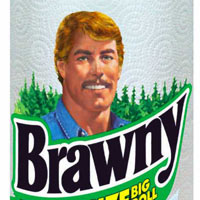
I’ve been coming up with competitions for quite a while. I’ve become obsessed with NaBloPoMo (Can’t stop linking!) to the point of creating a spin-off monthly regimen called NaBeGroMo -- National Beard Growing Month. Also occurring over November, NaBeGroMo is an excuse for men to be at their most manly. Come December, I want to look like the OxyClean Guy, or at least the Brawny Guy.


At eight days growth, I think I’m showing progress.


YEAHHHH!


Anyone is free to join. If you know me personally, you are already involved, through the Inclusion Method. I’ll explain more about the Inclusion Method later this month.

--------------------------

Some other pending/completed competitions:


-- The 125m dash: Me vs. J-dubbs (my roommate). Originally this was to be a 200m dash, but no one in attendance could decipher the lines on the track. As a result, the distance was (gu)estimated. I came away the victor after Jeremy slipped on a banana peel and pulled a groin. Ironically, it was from the very banana he had eaten during his warm-up lap.


-- The Beard-off: Me vs. Thed (other roommate). This was a precursor to NaBeGroMo and started inadvertently when both of our respective special lady friends ask that we grow beards. After about two weeks, we asked each other about the disheveled appearances, only to discover that our face hairs had been secretly dueling. The race was on. Scratch that: the fight was on. A knife fight. With hair. It was exactly like a knife fight. The fight ended when my face got real itchy and my special lady friend said she had no preference over beard vs. no-beard. No-beard won, which means I lost. But this paved the way for NaBeGroMo, so I can’t complain. You know me.


-- Free-style swim across Lake Erie: Me vs. Mike Sokol: This competition is still in the preliminary stages, as I’m still learning how to swim (M.Sokol, on the other hand, has shattered records back in Pittsburgh), but once I learn, look out Mike! I figure I can take a break once I make it to the breaker, then Canada is only a short ways away. Does Power Gel work in water? I hope so.

-- Victory Cigars: Me and Charles Parsons vs. Kent State: This wasn’t so much a competition as it was a premature celebration. One week into our last semester of college, Parsons and I smoked victory cigars because ‘we’d won.’ That last semester turned out to be a lot longer than we thought. We had peaked a little early. The jury, I think, is still out on this one in terms of whether it was a win or a loss. I still say that we won; Charlie disagrees. And so it goes.


-------------------------

Ka-plow! 750 words. You are so done Kate. DeDeChiBo for me!

Wednesday, November 07, 2007

Nor’easter

Cleveland had snapped. Whereas before, it had been batting us around with benign fall temps, it finally lost its head and pummeled us all with frigid gusts moving a million miles an hour off the lake.

Cleveland goes a little crazy during the winter months. Not completely insano, but tilted a few degrees on its axis. Those on the periphery slide off into the abyss or crowd more toward the center and create tension that doesn’t exist during the mild half of the year.

In the winter, in days like this, the cold get colder, the hungry get hungrier, and everyone feels like the world owes them something. The world today is Cleveland and Cleveland is owed a lot. It’s not about to give anything back. It can’t give anything back. Not today anyway. It’s just too damned cold.

Tuesday, November 06, 2007

Transit

Climbing the escalator out of the depths of Tower City, I dusted another afternoon commute on the RTA from my shoulders. The polished brass sidewalls of the mechanical stair are sumptuous, farcical. In the earlier days of my commute to work, before I discovered the joy of cycling, I would climb out of the Tower City Station every day. On most days, either the ascending or descending escalator would be out of commission. Sometimes, both were busted. The area in question would be secured by a waist-high curtain that apologized profusely but curtly for the inconvenience -- So Sorry, But None Shall Pass. The barrier would stay raised for the better part of a week, then would switch sides. It seemed that the Cleveland RTA was on a biweekly rotation. It was either easy to come into the city or easy to leave the city. One or the other. Sometimes, rarely, it would be as easy to come as it would be to go. But those times were few and far between.

I took the train to work today because it was blustery and the leaves were whipping about, collecting (as I’m so fond of saying) around storm drains and the corners of buildings. I felt introspective. Today was a day that was easier to come into the city than to leave. The up escalator was working; the one down, not so much. An old man with a cane took each metal step one at a time. Cane-stepstep-cane-stepstep-cane-stepstep. As we drew parallel, the old man and I, a line had begun to file in behind him. I turned to look back as one of the younger folk attempted to squeeze past. I didn’t catch the result of the push, because my journey had reached its terminus and I accelerated away from the mobile staircase.

Walking out the doors onto Public Square, I thought, as I did every time prior, This place should be a train station. I thought this because the place should be a train station. I realized, of course, that it was just that in a previous life. But still, it should be.

Public Square today was cause for celebration. The fences had been removed, the square was open for travel once more. I recalled when they sealed the place up in late July, put up fences as an inner boundary, then, a few weeks later, expanded the territory to secure a much wider swath of land. Commuters like myself were herded like cattle through a network of fences until we reached the freedom of Soldiers and Sailors, when Cleveland opened back up to us again.

That first day of the fences, back in July, I followed a man off the train. He had boarded at the E. 105 stop clutching a sheathed Black & Mild, which he carried up the marble steps (the ascending escalator being out of operation that week) and along the concourse leading out onto the Square. When we exited and were greeted with an endless stretch of temporary chainlink fencing, he turned and said, to no one in particular, “Man, this is bull shit.”

These days, as you climb out the RTA pit in Tower City, you are beholden a tremendous banner in the colors of our fair flag: RTA VOTED BEST PUBLIC TRANSIT SYSTEM IN THE NATION. ‘How could this have possibly happened?’ you ask, not actually realizing that you have never been late for work because of the train. The escalators, maybe, but never the train.

It should be said that I was surprised when I walked onto Public Square and found it open again. I utilized my old diagonal route past the fountain, through the intersection and into the tree-lined quadrant where all the homeless people hang out after hours. Naturally, I don’t take this way on the return trip at night. Too many homeless people. Too many variables. Plus, it’s Cleveland, and sometimes it’s harder to stay than to go, and the routes of ingress and egress are rarely in equilibrium.

Love text

Baby baby baby
You my baby
Love you smuch
You don't have to
have my baby
cause you
my baby
Baby baby

Sunday, November 04, 2007

Potluck

Because at this stage in my life I need an excuse to write, I am participating in National Blog Posting Month, or NaBloPoMo for short. Notice the subtle placement of PoMo in the title. I just couldn’t resist. Basically it's a post-a-day for a month. Four days behind already. GD it!

Last night, KateSpace urged me to enter into this writing regimen, because, well, she was. And because she was, I should. This conversation occurred at a potluck dinner party hosted by my roommates and I.
While double-fisting Christmas Ale and gyros, Kate and I talked about how we needed to blog more. The Potluck greatly appreciated the reveler who provided the lamb carcass and rotisserie spit upon which to roast it. I also appreciated the minority of vegetarians (they’re always in the minority, aren’t they) and one Vegan who brought assorted veggies, like tomatoes and onions for said gyros. My contribution to the gyro feast, naturally, was the flat bread, which was, naturally, from the Superfresh. I can never pat myself on the back too hard.

The party hit an awkward patch when Mike Sokol, reveler of revelers, showed up with a live lamb because he wanted his gyros to be fresh(est). The vegetarians gasped. The Vegan fainted facefirst into the hummos. Celery went everywhere. After some coaxing (mainly by the lamb herself), Mike Sokol wavered in his resolve for the FRESHEST GYROS EVER and opted instead to drink his potluck dinner. 13 or so Christmas Ales later, Mike Sokol was still murdering everyone at Wii Tennis and the Vegan left with a new pet (the lamb, not Mike Sokol).

At one point, I pulled a groin lunging for one of Mike’s elusive cross-court returns. My foot slid into some spilled baba and down I went, Wiimote breaking free from my clammy grasp and sailing fortuitously into a marshmallow pyramid someone had erected.

My evening was fueled as much by gyros as it was by White Russians and Christmas Ales. By four in the morning (actually it was probably three, because we rotated back to EST), I was limping/stumbling down Derbyshire with someone who had decided to park a mile or two away. Genteelman that I am, I wanted to make sure the lady made it back to her car okay.

Maybe it was the Ales or the crisp November air or that feeling you get when you gain an hour in the middle of the night -- the lapse when you feel like nothing really counts, you lose yourself, all bets are off, the earth stops turning, etc, etc -- that made me start bitching about the corporate machine. I would imagine my comments were fairly off-putting. My argument was that working for corporate USA was negating my education as an English major. I said that I was losing my prowess with the metaphor. And it was all because of the corporation -- a huge fat guy that you just keep feeding more and more and more and more and more. Never full. Never ever ever full. More and more and more and more and m


---------------------

Later, I woke up on the stoop of my apartment will all the symptoms of EST lag. The front pocket had been torn from my thrifted Dockers shirt. I chipped something crusty (blood? baba?) from the corner of my mouth. One sock was missing. I had no idea how I got there.


Tuesday, October 09, 2007

Some Retail Experience

I recall a few summers ago, I took a job at a sunglass boutique in a Florida outlet mall. I can say with confidence that the market for sunglasses was much higher in Florida than Ohio. The sunglass store that employed me was hip and fashionable, with oak floors and mod glass cases. The newest indie pop music spewed forth from the speakers.

“Ray-ban aviators are on sale this week,” I’d grin, having never worn a pair of sunglasses in my life. From the looks of me, all pasty white and wearing a pair of black plastic-rimmed glasses, it would seem quite obvious that I was out of my element, a man adrift in a raging torrent of lies, lies, lies. Ah, retail. Ah, sales.

I lied about the life span of a pair of $300 Maui Jims. I lied about the size of that lady’s nose. I lied about my own retail experience to get the damn job. But my manager ate it up. And so did the customers—especially the Europeans who would stroll in, living up their 6-week ‘holidays‘ in sunny F-L-A. With a Cockney-to-American dictionary in one hand and a calculator in the other, they’d attempt to haggle, dropping nomenclature like ‘wanker’ and ‘cheers’ while furiously punching the buttons on the calculator to determine just how much of a deal they were receiving on the pair of $220 Oakleys.

“How’s the exchange rate these days?” I’d ask, taking a break from hocking a bottle of lens cleaner and matching microfiber cloth.

They’d mumble something like, “1.37,” with a French or German or Hungarian accent.

I’d nod, not really understanding math in any language.

By end of my first day at Sunglass Outlet, I had been exposed to many foreign cultures (ahem, bourgeois European cultures) and had made a killing! I had met and even exceeded my quota. Then I attempted to close the store.

In my open-faced fibs, I may have alluded to a bit more retail experience than I actually possessed. I had said ‘some’ on my application, whereas reality led a bit closer to none. Maybe less than none. But it couldn’t be that hard, right? I’m in college, right? I’m a writer, right? Okay, aspiring writer. But like any good writer, I took notes on the closing procedure when my manager had gone over them before she left. And did she ever leave! Like breeze over the list and go, out the door. “If you have any questions, call my cell phone,” she had said, already out the door.

“No problem!” I yelled. “I have retail experience! And I took notes!”

Those “notes” were really just a bunch of truncated words scrawled on the back of a receipt.
Things like “C. draw”—count drawer. Easy enough.

Um. “Of lit”—off light. Turn off light. Gotcha.
Eh. “sec. alm” oh oh!—security alarm!
And “lock,” as in the door, upon me leaving a productive day at Sunglass Outlet.

I clutched my list tightly as everything fell apart around me. First off, I had no idea how to balance a cash register. I’m a writer—excuse me, aspiring writer—not an accountant. That went horribly and took close to an hour. As I went to close the cash drawer, the thing jammed and was left halfway open. Bills were literally hanging out of it.

For the life of me, I couldn’t find the damn light switch. I had just pictured a big lever in the back labeled “on” and “off.” No such luck. I couldn’t find one light switch in the whole store.

So I called my boss. She said she could bail me out. Nope. Three times I rang her, three times—nothing, stonewalled. She was not there when I needed her.

With the cash register jammed open and all the lights ablaze, I opened my toolbox—my writer’s toolbox—and set to work on the most over-the-top explanation letter of my life. Although I don’t remember the content word-for-word, I know I used phrases like “Panicked stupor” (i.e.: “In a panicked stupor, I prematurely closed the cash drawer, jamming it before it could fully close.”). I tried to combine eloquence with hysteria and I think I pulled it off. In reality, I could care less about the store. I had only worked there one day. What did I have to lose? And she said she’d have phone on. Liar.

I strutted out the doors that night, with my Sunglass Outlet shining like a beacon in the night for any eligible cat burglar. The cash register was left open, for God’s sake. Money was hanging out. I didn’t even bother setting the security alarm—I couldn’t find a light switch, how was I going to set the alarm?

I locked one of three necessary door locks, hopped on my bike, and rode home. I expected a call at nine from my manager the next morning. She would say that I was the worst salesman in history, that any moron could close a sunglass hut. But it never happened. I went into work the next day at three, as scheduled, and found the place intact. No shattered displays and stolen merchandise. The place was tip-top. I left the old girl undefended and she held up fine.

And my manager apologized to me for not answering my calls. She said it was her fault. How could such a blatant mistake on my part—certainly one that merited getting fired, if not sued—turn so drastically in my favor?

It was the note. My transient, hysterical note told it all. It explained the unlocked door, unarmed security alarm, glowing lights, and thief-welcoming cash register. I had found my voice.

“I don’t ever want to read that you were in a ‘panicked stupor’ ever again,” my manager said while showing me the workings of the fuse box that controlled the lights.

The summer went great. I sold sunglasses and made a fortune off well-to-do Euros.

“Welcome to Sunglass Outlet. I’m Ryan deBiase, writer and aspiring salesman.”

Wednesday, October 03, 2007

New blog

In the absence of any substantial posting these last few weeks, allow me to refer you to a new project I've been working on, The Burning River Bike Blog.

Launched last week by rockitecture.'s Thed Ferringer and I, this new site combines our love of bikes with our love of blogs. Plus there will be some nifty commentary on Cleveland as well, always from the POV of the ornery cyclist.

Yay!

Bikes!

Blogs!

What more could you ask for?

('posts')

Who the eff said that?

Friday, September 07, 2007

Points

I began my tuck near the top of the quarter-mile luge of Cedar Hill. I lowered my upper torso to my pumping legs, brought elbows closer to ribs. I became aerodynamic and sliced through the air and the traffic, reached the point where pedaling no longer made a difference and my bike and I, melding into a single inseparable unit, hit critical mass, our velocity left to the laws of physics. We accelerated at a rate of -9.8 m/s2.

Downhill was the easy part. My speed carried me at a rate constant to the cars sharing—albeit reluctantly—the road with me. At the bottom, I disappeared for a second under a railroad trestle and entered the right-turn only lane that always gives me trouble. This segment of my morning commute is tricky. Traffic backs up from a stoplight that controls the five-way intersection of Cedar, MLK Jr., and Carnegie. Usually, I ride the turning lane to its terminus and cut off cars that are turning, jockey to reenter traffic and cut off a few more cars going straight. Aggression is necessary to the biker looking to maintain momentum when transitioning from a steep downhill to a gradual climb. So I piss off a few motorists every day. That’s what they get—they’re motorists, they can take out their aggressions safely within their air conditioned bubbles. Some percolate enough as to wind down their window and call me asshole. In my defense, I always look for turn signals from the cars in the straight lane, just in case they get caught and can’t move over fast enough.

When I am wronged by a motorist, I am vocal with my frustration. I scream and people hear me. Pedestrians hear me. Motorists hear me. The very people that wrong me, they hear me.

When the CRV cut in front of me at the Cedar-MLK-Carnegie intersection that Friday morning, I slammed on my front and rear brakes and my back tire kicked out from behind me and I skidded sideways and drew parallel to the SUV as it skittered past me, a gasping 24 inches from collision.

All the while I yelled, ‘Hey! Hey! Hey! Signal! Signal! Signal!’ Then I corrected, recorrected and rerecorrected. I couldn’t adjust enough to get back onto Carnegie and jumped a curb onto the sidewalk and came to a stop. My temples throbbed, adrenaline pulsing from the downhill and the exertion and the near-death and such. I saw the CRV come to a stop a hundred feet up the road. The driver had already rolled down his window.

‘Fuckin’ asshole!’ he yelled.

‘FUCK YOU!’ I rebutted, ‘USE YOUR FUCKING TURN SIGNAL!’ I pointed at him across the swath of grass and trees that separates and Carnegie and MLK as the two roads veer away from one another.

I got my bike up to speed, hopped off the sidewalk and continued my morning commute. About a half mile down Carnegie, the reality hit me. I smiled to myself, thought,

Yelling obscenities at a motorist, getting the last word: +200 Indie-Urban points.

-----------------------------------

After about a month of biking downtown, I (along with help from Thed Ferringer of the urban-design blog rockitecture.) have conjured a points system for accruing urban cred. Indie-urban points are awarded based on one’s utilization of sustainable and socialized systems in place in any city. You can award them to yourself or others can award them to you.

Taking public transit, for instance, is one IU point per ride. Biking, because it is more independent and sustainable, is five IU points. You can also garner points when other indie-urbanites recognize your sweetness.

Some examples:

-- While leaving for work a few weeks ago, some kid with black-rimmed glasses, tight T-shirt and cut-off
slacks remarked, ‘Nice bike.’ He was obviously a biker and could appreciate my classic ride.


Compliment on your bike: + 25 IU points

-- I was checking out at Bruegers, clad in my normal commuting closes (cuffed jeans, T-shirt, fingerless
gloves, messenger bag) when the woman ahead in line asked if I was a bike messenger. I told her that I
was not a bike messenger, though I felt that if a situation presented itself in which a package needed
delivery, I could perform such a task. She told me to ‘Be safe.’ I told her I’d try my best.


Being confused with a bike messenger: +50 IU points

-- As I rolled onto the sidewalk in front of my building, sweaty and panting, a bike messenger slid into the
bike rack next to me. I gave him a nod and began getting ready for work (uncuffing my jeans, pulling a
polo over my T-shirt). He asked me what messenger agency I worked for. I told him that I only worked
for ‘one man’ and pointed at myself. He nodded, though still looked confused. I explained that I actually
worked in the building and we got to talking about my job and his. I thought more and more about
becoming a bike messenger in the early morning hours. But I’m not a morning person.


Being confused with a bike messenger by a bike messenger: +100 IU points

This points system is obviously very bike-heavy as it stands now. It is still open for interpretation. Hopefully, rockitecture. and NOMENCLATURE can combine forces to make this an equitable system for everyone in the city. That is, naturally, except for those who drive. Nothing can save them.

--------------------------------------------

Afterword:

When last week’s morning training session ended, I resumed my normal schedule of working from 1:00 in the afternoon to 10:00 at night. The roads at those times are less congested. Due to my experience with the CRV, I ride more cautiously, especially through that intersection. I signal more and try to ride in the correct lane. I’d like to think that the CRV driver is likewise more conscientious around bikers.

I feel more confident and less dangerous, both to myself and motorists. For this, I am going to award myself some points.

Growing increasingly comfortable with not driving to work: +30 IU points


Monday, August 27, 2007

Sustainable Dreams

Six months or so after graduating from college, I found a real job as an assistant editor for a global news distributor. I had spent my last four months as a server at a Lebanese restaurant and with this new job came the fiscal freedom of making more than $150 a week. I made a laundry list of future purchases, the top of which, naturally, was laundry detergent. Second, a new wardrobe.

I bought my own clothes -- and not even from a thrift store or yard sale. I actually braved the pre-fab faux community of Crocker Park, hit up H&M and Urban and bought nice clothes for myself. Then I went to Target and bought new sheets for my bed. Eyed the drapes.

Adulthood.
Health insurance.
Dental plan.
Weekend hobbies.
Routine.
Martini bars.
Kobe burgers.
Planning retirement.

But despite the perpetual vortex of standardized living, there were some parts of young urban professionalism that I could not embrace. I did not rush out and buy a car -- though I did, for a minute, seriously consider myself in a VW Passat wagon -- nor will I any time soon. If anything, I became more focused on sustainability, and cast aside the standard notion of car ownership. For the first few weeks at my new job, I took the Cleveland RTA into town every day. Although I enjoyed the feeling of community from taking public transit, I knew I could be more proactive in my morning commute.

Another knee-jerk reaction to getting this job was to rush out and buy a shiny new bike. And I almost did, but my better judgment (read: thriftiness) wouldn’t allow it. Following the advice of one of my more bike-savvy friends, I claimed and restored an old road bike that had been accumulating dust in the basement of my apartment since I had moved in six months prior (and probably long before that). But I hesitated in riding it the five miles into town -- the RTA was treating me well and taking the train was a lot less impacting than riding amongst traffic. Instead I rode my bike to the Rapid station and chained it there until I came back in the evening.

Then one day, I missed the train by about a minute, and instead of waiting for the next one and being late for work, I hopped back on my bike and hit the road. I made it to work sooner than if I had taken the train. I never looked back. Despite arriving to work sweaty and rather exhausted, I felt real good. The cycling commute fueled my sustainability ideals.

About a month or so into my job, I received a packet from JP Morgan detailing my options for a 401(K) plan.

Want your retirement to match your dreams? it asked. Start early.

I sifted through the verbiage and percentages and match programs and fifty-cents-to-the-dollar ratios. I planned for my future. I didn’t leave any money on the table.

The retirement thing got me thinking. I pondered long and hard as to where I’d land in my twilight years. Could I maintain this sustainable lifestyle for all that time? If my dreams were to simply live sustainably, how would those dreams manifest themselves in reality 40+ years down the line?

I imagined myself a vigorous, virile, virtuous, sixty-something renaissance man living with my organic wife and our beagle somewhere in southern British Columbia, possibly on Victoria Island, near Vancouver. I’d have somewhere in the neighborhood of twenty acres upon which I have placed my modest ranch house with wind turbine, solar panels, and wood-burning stove/flatbread oven. I’d have my ‘victory garden’ of lettuce, garlic, tomatoes, onions, cucumbers, etc. I’d have a few acres for my apple orchard. Maybe I’d raise one lamb a year to sacrifice for the annual gyro feast that I’d invite all my old college friends to. But it’s more about living on the periphery of the grid, being in a place where I could get some writing done and not feel like I’m consuming more than I’m producing.

I dove a little further into my dream, and imagined how much my grandchildren would hate coming to visit their weird Pap living in Western Canada.

‘He makes me ride a stationary bike for twenty minutes to heat the water for my showers. . .”

‘Whenever I go for a bike ride around his farm, he makes me wear a backpack with a battery in it, so I don’t waste any of my bioenergy, whatever the eff that means. . .’

‘He always makes me pick apples when I go outside. God!’

‘All he talks about is how he biked to work every day of his life to save for this ranch. What a freak. . .’

‘His electric station wagon is pretty cool though. . .’

But this malice is such a long way off. Throughout youth and young manhood, the future was always a rather hazy image -- distorted, shifty, rough around the edges. Now, I look toward a future that I can legitimately build for myself. 40 years is quite a long way. I’m sure that path to a completely sustainable lifestyle will intersect a few art deco jungles, and maybe an inner-ring suburb or two.

For the moment, I can appreciate the decision to join the legions pumping into the city each day, while at the same time leaning -- sometimes casually, sometimes drastically -- toward the periphery.

Monday, August 20, 2007

Obit*

Here's an oldie but a goodie, from the days of Postmodern Dystopia. Written at a rather low point in my life, April of 2005, this phony obituary was a result of getting dumped while reading Cormac McCarthy's All the Pretty Horses -- a dystopic (though stylistically engaging) novel that I took way too seriously at the time.

You can also pick up on some rather obvious allusions to Elliot Smith.

It should be noted beforehand that I hold no ill will towards my parents, nor am I under any notion that they hold ill will towards me; this is a piece of creative non-fiction, and their roles, as with the roles of the others mentioned herein, were intended for comedic value.

This piece should be taken lightly, if taken at all. --RdB, '07


RAVENNA, Ohio, April 20 /Record-Courier/ -- Stabbed in the heart in an apparent suicide, not-so-famed writer R. deBiase was found in his humble Lake Street apartment yesterday. For those who knew Mr. deBiase, this death was not unexpected.

“I’m surprised he didn’t do this a lot earlier,” said acquaintance Ryan Wilkins.

His body of work left behind was considerably less than mediocre, which begs the question: What has he been doing this whole time?

Neither a death note nor Will was provided by deBiase, but in the days preceding his suicide, he apparently sold all of his possessions, which he lumped into a single check for $1,079.23. The money will be split by his parents, who were quite distraught after having spent tens of thousands of dollars in education loans to each receive a scant $539.62 in return. They did mention that his death did come as a bit of shock, but they’d get over it, in time. What they would not get over was debt.

The coroner commented that the method of suicide—butcher’s knife through the heart—was executed with surgical precision, or at least a butcher’s precision.

“I don’t think he even felt any pain,” said Coroner Mike Blasé, “just shock, awe, and death. Seems like a waste. . .that was one good knife. Won’t ever be able to use that one again.”

deBiase’s roommate, Geoffrey Bigler, was not available for comment, as he was out on multiple, simultaneous dates, reported to be getting the most “izz-ass” of his life.

Good friend Justin Hofmann says of Bigler, “Yeah, he said something about getting tons of tang, then how pissed he was at dB for ruining one of his ornament knives. I really can’t blame Geoff for being angry, come to think of it, sucks about that knife.”

The knife was valued at well over twelve dollars, which is set to come out of the check deBiase left behind.

His parents were particularly angered: “I wish he had chosen a cheaper knife, we’re already in debt here.”

If anything, the death of deBiase should prove to us that the most rational human beings ultimately must assess their own sociological worth, and determine if they can be at all beneficial to that society. As a self-proclaimed “rational,” deBiase glanced at himself in the mirror and decided that society was better than he [justly], and that he must rationalize his own existence. In an age of dystopia, we can all respect a rational suicide here and there.

*Inspired by a post of the same name from Tumor Rumors.

Friday, July 20, 2007

apologies

To my loyal reader(s):

Allow me to apologize for my shoddy management of NOMENCLATURE this last month. I went on vacation and then started a new job and haven't had as much time or energy as I'd like to devote to creative writing. Having a real job is something altogether new for me, so I've been focusing a lot of attention on that these last few weeks.

As with any big change, it is important to find a rhythm. This job will provide a nice little routine for me, and hopefully my writing will grow from it. In the meantime, as is often what happens to me when I start a new job, I've been having a lot of trouble sleeping. I keep waking in the middle of the night with the feeling that I'm being watched. It might have to do with being thrown into new surroundings, trying to learn new procedures, finding a new schedule, etc. etc. The lack of sleep hasn't exactly fostered the creative juices.

I'm really enjoying this summer, though, and I feel like Cleveland and I have found some common ground. I'd like to thank Cleveland for giving me a job; likewise, I feel that I am giving back to the city by taking public transit to work every day and remaining generally positive when downtown.

I can't say yet how often I'll be posting to NOMENCLATURE over the next few weeks. If you've stayed with me this long, then I guess sporadic posting (at best) is expected by this point. Let me fall into a new routine.

I'll stay with you if you stay with me.

Sincerest thanks,

--RdB